
Packing List for High-Altitude Treks in the Karakoram
The definitive gear guide: boots, layer systems, -20°C sleeping bags, trekking poles, and medical kit essentials for Pakistan's mountains.

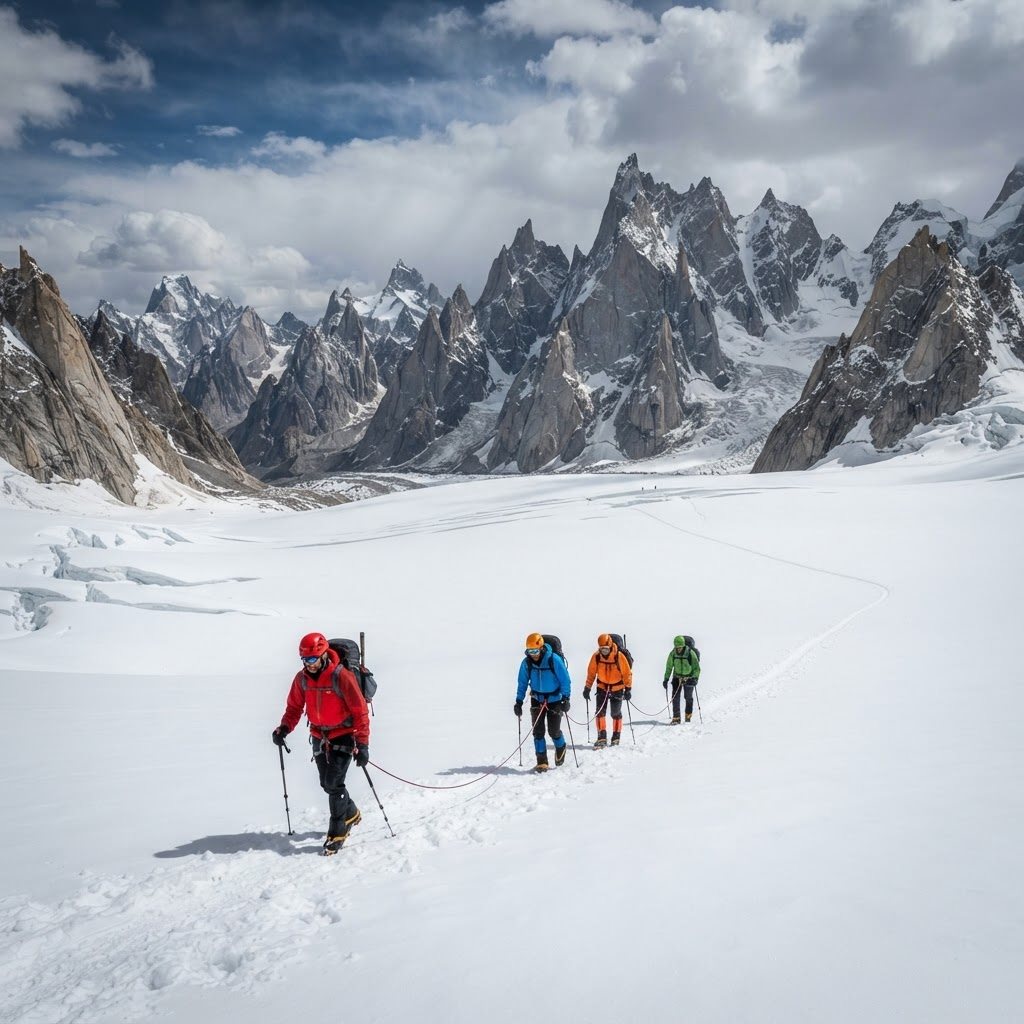
Layering System: Base, Mid, Outer
High Karakoram temperatures can swing from +25°C under intense afternoon glacier sun to -10°C or colder after sunset. Use a four-tier system: merino wool base layers, breathable grid-fleece mid layers, windproof softshell trekking pants, and a 800+ fill down jacket for evenings.
Footwear: Trekking Boots & Camp Shoes
Break in sturdy B1 or B2-rated mountaineering/trekking boots with Vibram soles well before departure. For camps, bring lightweight down booties or slip-on sneakers to give your feet a rest after hours on glacial moraines.
Sleeping Bag & Mattresses
A sleeping bag rated to a comfort rating of -15°C to -20°C is required for Concordia and Snow Lake. While Indus Adventure provides thick insulated camp foam mattresses, bringing an extra inflatable sleeping pad (R-value 3.5+) guarantees a warm night's rest on top of ice.
Poles, Crampons & Sun Protection
Telescopic trekking poles with snow baskets reduce knee strain by 25% on moraine descents. Category 3 or 4 glacier sunglasses with side shields are essential to prevent snow blindness, paired with SPF 50+ zinc sunscreen.
Personal First Aid & High Altitude Meds
Carry personal prescriptions, blister prevention (Leukotape/moleskin), electrolyte tablets, ibuprofen, Diamox (acetazolamide) after consulting your physician, and water purification tablets.
Continue Reading
Related Travel Guides
Best Time to Visit Gilgit-Baltistan: Seasons, Weather & Trekking Windows
A seasonal guide to planning your journey across the Karakoram and Himalayas — from spring blossoms to high-altitude summer treks and golden autumn foliage.
K2 Base Camp Trek: Preparation, Route, Permits & What to Expect
Everything you need to know before stepping foot on the Baltoro Glacier: fitness preparation, government NOC permits, day-by-day pacing, and safety protocols.